About Nicola Partfitt

This author has not yet filled in any details.
So far Nicola Partfitt has created 6 blog entries.

Curve: Rebranding Re:Meat to Develop Proteins Across Industries

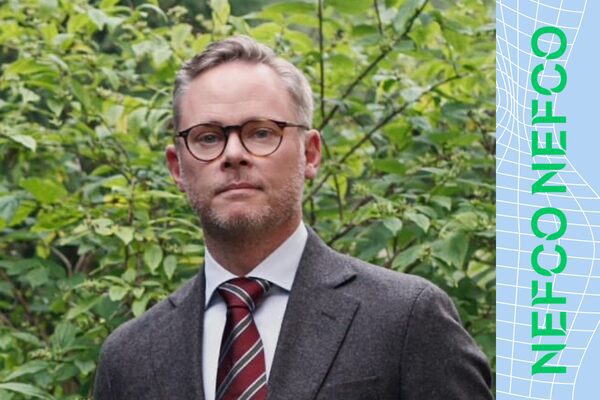
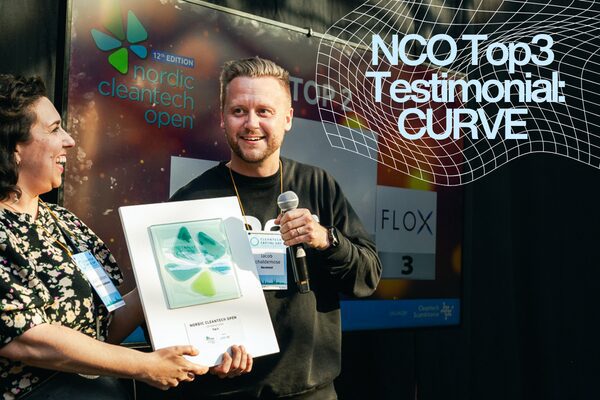
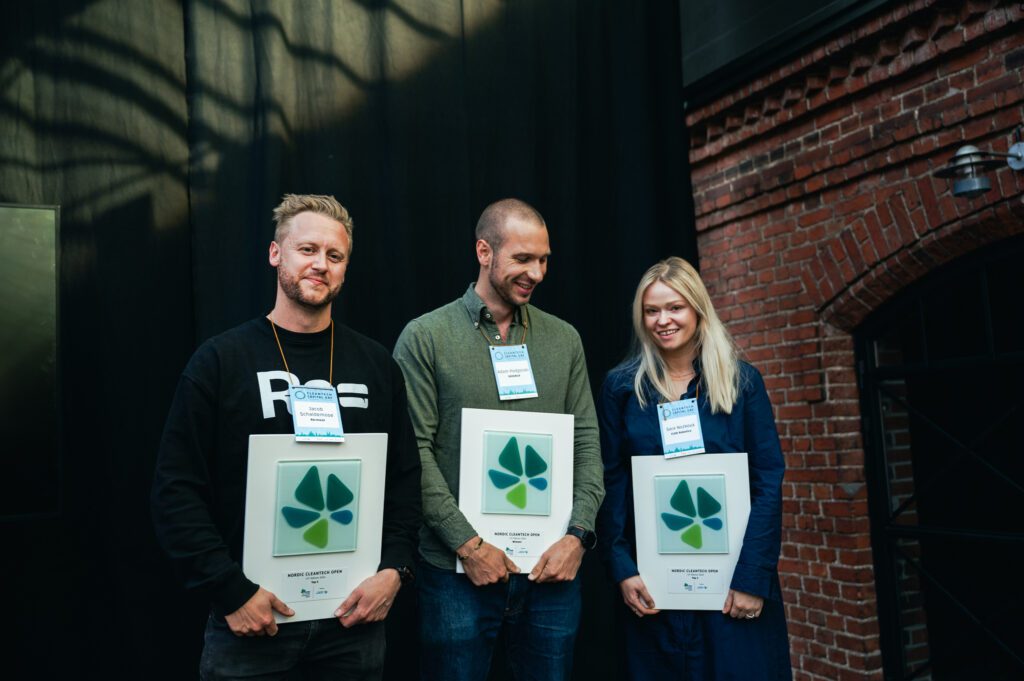
When we first met the startup Re:Meat in 2024, it was clear that something big was brewing. Since then, they’ve rebranded to Curve, and their vision has grown as fast as their bioreactors. Cleantech Scandinavia sat down with CEO and co-founder Jacob Schaldemose Peterson to discuss Curve’s experience in the 12th edition of Nordic Cleantech Open, where they placed in the top three, and to hear what has happened since.
Curve is on a mission to make protein production more sustainable, not just meat, but also milk proteins, collagen for cosmetics, and even other valuable molecules. Through precision fermentation, they can program microorganisms to produce exactly the protein you want. Think of it as sending tiny DNA instructions to yeast and bacteria, enabling Curve to produce milk, collagen, or other valuable compounds.

One of the most exciting updates is that Curve has two new 300-liter food-grade bioreactors, which arrived in Lund in January 2026.  This means they can now test their technology at an industrially representable scale, a big step toward making proteins more accessible and environmentally friendly.

Building a cleantech company involves far more than science; it’s a balancing act of wearing many hats. Securing the right investors, finding the right partnerships, and building strong relationships with customers are just as important, and Curve is tackling all these aspects at once.
After raising €1M in March 2025 from family offices and angel investors, Curve is now gearing up for a €2M round in spring 2026 with Swedish food tech investors ready to help scale their precision fermentation technology and bring sustainable proteins to multiple industries.

The team behind Curve is as diverse as their technology: two co-founders handling commercial agreements and financials, a CTO leading hardware development, an R&D scientist with a background in microbiology, an experienced business development professional handling the customer pipeline, and a relatively new addition; a biotech engineer supporting the development of the intersection of hardware and software. Together, they aim to enable today’s meat, dairy, and cosmetics producers to become bio-producers, without consumers even noticing.

Reflecting on their NCO experience, Jacob highlights the strong format and the opportunity to connect with a wide range of investors. While food tech remains a niche within cleantech, Curve sees growing momentum and would welcome even more food-focused investors in cleantech circles. Overall, the event offered valuable exposure and meaningful conversations, underscoring the potential of food tech in a highly specialized field.

Curve isn’t just a name change, it’s a step toward making sustainable protein production commercially viable, while showing that science can be exciting and accessible along the way. The company is now moving forward with technology that has the potential to transform not only the food industry but also make waves in cosmetics and chemical production.

Visit Curve’s website to learn more: https://www.curvebio.tech/

Curve’s Linkedin: https://www.linkedin.com/company/curvebiotech/
Curve: Rebranding Re:Meat to Develop Proteins Across Industries2026-02-24T14:06:01+01:00

What did the end of 2025 bring for cleantech? New quarterly brief

Our latest Quarterly Brief covers Q3 and Q4 2025 — a period that confirmed one clear trend: Nordic cleantech is moving from innovation to industrial scale, and the conversation is increasingly about how to finance and accelerate that transition.

A key focus in this edition is the persistent Series B funding gap. Discussions with investors, policymakers and industry, supported by insights from recent reports by World Fund and the Green Finance Institute, underline that the challenge is not a lack of ideas, but access to growth capital. The region has strong pipelines, yet too few investors are able to lead large-scale funding rounds. Closing this gap is critical if Nordic companies are to compete globally.

We also look at how cleantech is becoming central to industry itself. From advanced materials and electrified transport to offshore wind and infrastructure projects, clean technologies are now embedded in core industrial strategy. This shift is reflected in major policy developments across Norway and Denmark, including expanded renewable tenders, stronger climate targets, offshore wind initiatives and new support for electrification and green innovation.

At the European level, more than 100 companies and investors have signed an open letter calling for stronger “Made in Europe” requirements to create predictable demand for European cleantech. We have joined this call, highlighting the need for policy frameworks that enable scaling — not just innovation.

Read the full report to explore the details behind these developments and understand where the Nordic cleantech ecosystem is heading next.

What did the end of 2025 bring for cleantech? New quarterly brief2026-02-26T20:09:40+01:00

Enjay – Ready to scale Waste Heat Power for industries

Food industry giants producing snacks, petfood or ingredients, as well as laundries, foundries and other process industry, all boast heavy-duty ventilation systems. Most of the energy they consume, is used solely one time and then vented out – Enjay deploys their patented technology, to turn that waste into a growing portfolio of recurring revenue contracts. With backing from major investment players such as Karl-Johan Persson and Gustaf Hermelin, and the Swedish Energy Agency, Enjay has reached proof of concept in a number of industries. Since the take-off in the ventilation intensive fast food industry back in 2019, they have since then completed almost 200 projects.

”Industrial processes make up for one third of the energy consumption on earth, and a large part§ of it is only used once why the heat that goes out with ventilation is an utapped source of energy. We call it Waste Heat Power and we are the first energy company to deliver energy sourced from it” says Nils Lekeberg, Vice president & co-founder of Enjay.

 We are looking forward to hearing more about Enjay’s Waste Heat Power at the presentations on the 2nd of December. McKinsey has made estimations that 3 100 Tera Watt hours are waste heat annually. Just in comparison, if you add up the energy produced in 2024 by all nuclear plants in the world, that was 2 800 Tera Watt hours. Enjay’s heat exchanger technology unlocks the potential of Waste Heat Power, recovering the heat, generating 100% renewable energy, and available at the spot without any distribution grid necessary.

”We developed and patented a new core technology for heat exchangers, where we make use of physical natural forces in a complete novel way. This technical pivot is what now enable us to turn Waste Heat Power via Energy-as-a-Service contracts into a quickly growing ARR portfolio” says Nils Lekeberg.

Enjay follows a structured sales process when entering a new segment. By first establishing a repeatable technical solution, which can then be rolled-out to small, medium and large scale key-accounts in that same industry. There are already solutions for the snacks industry, the petfood industry, and the fastfood industry and Enjay will be laser-focused on developing these three over the next 18 months.

”We have de-risked our technology as well as customer acceptance and market scalability. Now we are raising a small 1M round at the end of 2025, allowing us to fully de-risk the EaaS model ahead of a larger A-round for scale-up in 2027” says Lekeberg.

 Waste Heat Power is attracting high interest from investors, and with Enjay’s track record they are now in a sweet spot for investments. When we ask Lekeberg how he feels about being part of the 7th annual Sweden Sustaintech Venture Day as a first time participant, he says that based on the past positive experiences from being a part of the Cleantech Scandinavia and Swedish Energy Agency Accelerator, his expectations from this highly reputed event are high.


Short questions for Nils

  • Name: Nils Lekeberg
  • Age: 52
  • Title: Vice President and Co-Founder
  • Last book read: Strange the dreamer, by Laini Taylor (a must-read!)
  • Mantra: As an entrepreneur, your life is full of tasks, not problems.
  • Best tip for a sustainable future: What you do, matters.

Enjay – Ready to scale Waste Heat Power for industries2026-02-23T16:34:00+01:00

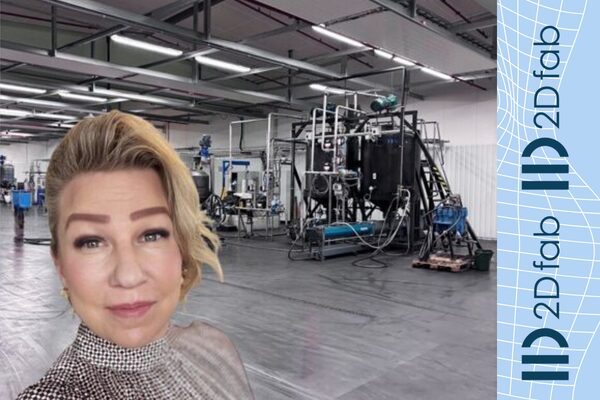
Graphene for industrial use is attracting international attention

There will be some focus on new materials at Sweden Sustaintech Venture Day on the 2nd of December. 2D fab is a graphene producer for industrial scale. The material graphene has great properties and has the potential to reduce CO2 emissions by enhancing material efficiency and improving energy storage. As an example, in industries like construction it can reinforce concrete, reducing the need for cement.

Graphene is an exciting material with premium features, what makes 2D fab unique in this field?

We produce high end graphene products and we also apply the graphene to different usages. We are one of the market leaders in Europe in terms of volume. As we have built a fully European raw-material supply chain and control the entire value chain from graphite to graphene, we can scale quickly, secure consistent quality and volumes, and maintain very strong margins. Apart from the reduction of CO2 in graphene’s application, our clients may cut costs and increase production speed significantly. We focus mainly on clients that have large material flows such as adhesives where we can reduce drying times, and the concrete building industry and infrastructure.

Where is your company as of now in development?

We have demonstrated in more than 20 pilot projects how we can deliver results in several important industries. We have projects ongoing with IKEA and Kemind, an Italian chemical company, as well as DA Smith where our graphene-based additives improve adhesive performance. Another exciting project is with Swerock and Gunnar Prefab where we have made speed bumps and central railing with graphene induced concrete. We also see a growing interest from the defense sector where aid to Ukraine is a new, and especially attractive area. Now we are currently starting to have smallercommercial revenue streams and the next step is to convert ongoing pilots into larger clients.

How has your cap table developed?

Even though the geopolitical situation has been risky, we fell that right now investors are again looking into the future. Sweden is good at financing the early stage innovation with grants and loans. As we are now transforming into a mature company close to commercialization, it creates a natural challenge to secure growth capital while still being pre-revenue. We have learned that it is important to find investors that understand graphene and the market we are operating in. We have had faithful and professional investors that has supported us during the tougher times.

We now saw interest from several international players, such as lots of contacts from different parts of Europe but also from Asia, for example Japan. In Finland we have several dialogues and we seem to have a good name attracting investors’ interest. Being a part of the Swedish Energy Agency and Cleantech Scandinavia Accelerator has been a contribution to attract investor interest.

SHORT QUESTIONS TO HELENA HENKE

Age: 43

Role: CEO 2D fab

Education: MSc in Business & Economics with a major in management of growing enterprises from the School of Business, Economics and Law at the University of Gothenburg

Vision: To position 2D fab as the leading partner for industries seeking high-impact, scalable material solutions that deliver both climate benefits and stronger industrial performance.

Book to read: Lessons in Chemistry by Bonnie Garmus, a very entertaining book for anyone who enjoys a clever takedown of old-school norms.

Sustainable Leisure Tip: I can recommend spending your time with miniature dachshunds, they’re experts in slow living, which is very healthy for your body, your mind and your emotional well-being.

Graphene for industrial use is attracting international attention2026-02-23T16:34:49+01:00

Hype is gone – The Nordic Green Bank discusses healthier markets

Fredrik Larsson promotes loan financing for international scaling. Nefco, the Nordic Green Bank is owned by the five Nordic countries, and a long since-partner to Sweden Sustaintech Venture Day. We asked Fredrik Larsson, Nefco’s Senior Investment Adviser in Sweden, how is the Nordic Sustaintech financing sector doing 2025?

With less capital in the space, the healthiest business ideas are surviving and attracting capital, and there are less investments into businesses that rely predominantly on sustainable values. Companies are starting to show a track record of sales and real business. Investors remaining in the space are considerably more aware of the patience needed for the longer technical development cycles and industrial build-up periods that in this space can reach a ten-year-period.

“We’re all aware of the patience required from Sustaintech investors, and the challenge of the ‘missing middle’ in financing, where a long wait for sustainable growth is often necessary – and sometimes even desirable – after a great idea and technical innovation has been commercialised,” says Fredrik Larsson.

What types of cases are you most commonly encountering in this environment?

Proposals keep coming in but are today more specific in terms of more narrow ventures or deployments. Some areas where the market has really matured is for example development of smart and efficient electric grids. Another growing area where Sweden traditionally has been very strong is sustainable materials. We also see some well functioning circular solutions making its way to the market.

Innovation and rebuilding of Ukraine is another area where Nefco is very active. ”We have been active in Ukraine for 20 years since we were a part of the rebuilding projects in Eastern Europe and are financing public projects focusing on a green recovery for Ukraine”.

During times of conflict and international turmoil, one of the advantages are increased resilience and innovation on part of the companies. We also see more in depth risk simulations into the scale-up prognosis on a larger scale.

”I believe that innovation in the field is increasingly about how to build and scale your company rather than relying on investors to drive growth, which I consider a healthier approach” says Fredrik Larsson.

Hype is gone – The Nordic Green Bank discusses healthier markets2026-02-23T16:35:15+01:00

Green14: From winning Nordic Cleantech Open to Industry Impact

In October 2025, Cleantech Scandinavia sat down with Adam Podgórski, who co-founded Green14 together with Jan Dinkelspiel, to hear what’s been going on since their victory in Nordic Cleantech Open 2024. Adam is a chemical engineer from the solar industry who together with Jan, had a bold idea: to make silicon production greener — and strengthen the European value chain by localizing production. The name says it all: “Green” for sustainability, and “14” for silicon’s chemical number on the periodic table.

In 2024, the Green14 team won the 12th edition of the Nordic Cleantech Open (NCO) — an experience Adam describes as “amazing and truly one of a kind among cleantech events.” During Nordic Camp, they pitched to around 25 investors, had one-on-one meetings, and built connections that would last well beyond the competition.

So, what’s happened since they won? We caught up with Adam from Green14 in October 2025 to hear what’s been going on since their victory.

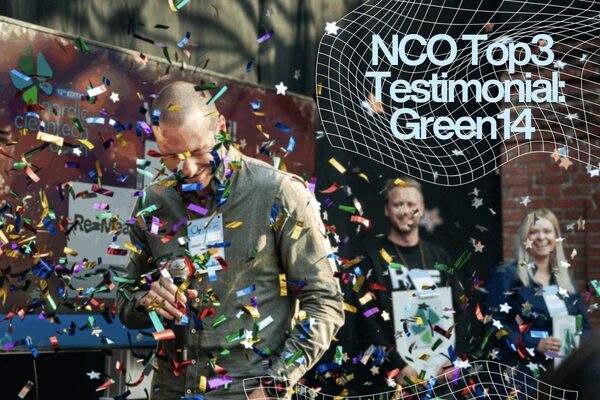
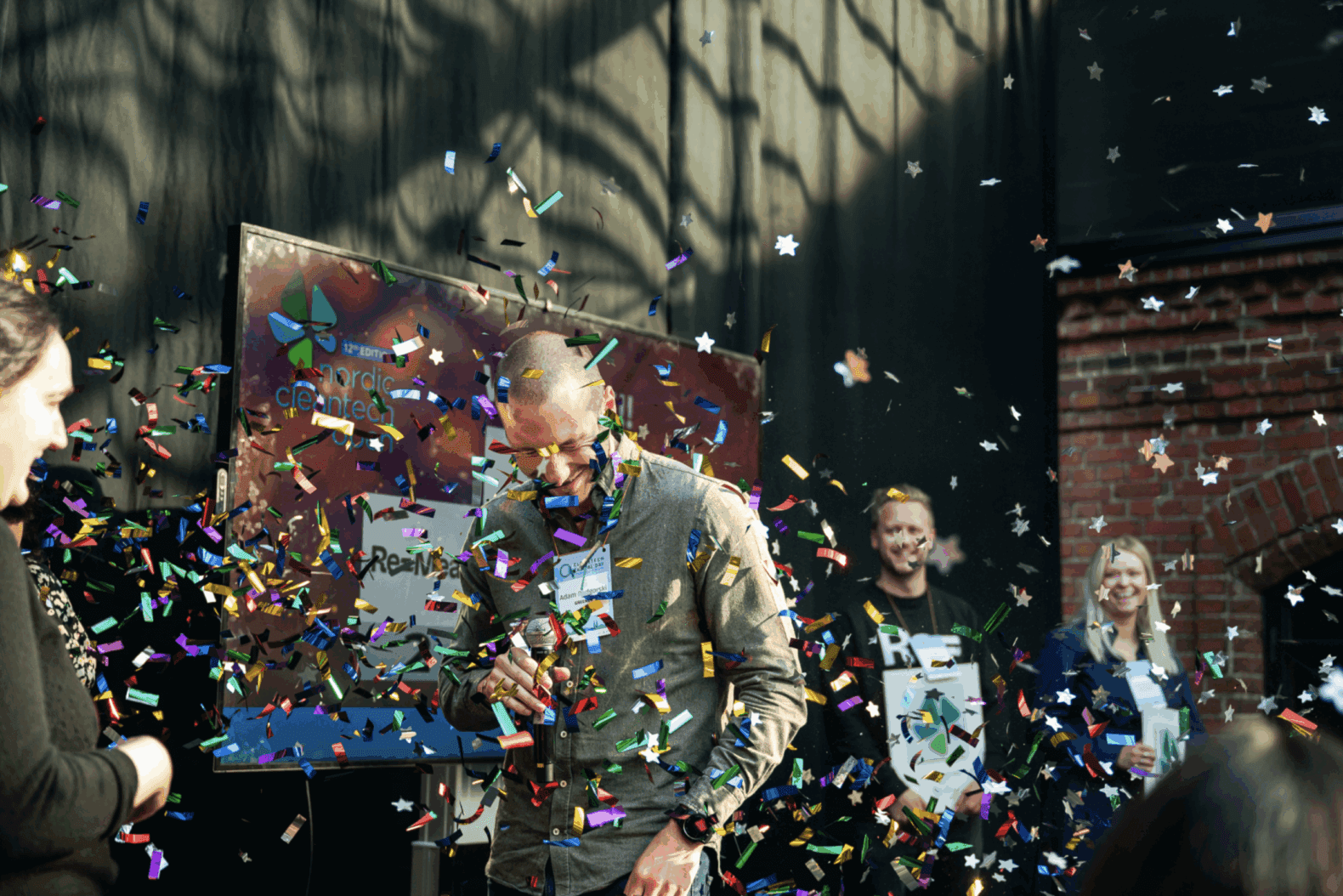
Thanks to the multiple stages of NCO that culminated in Cleantech Capital Day in Helsinki 2024, Green14 left with a treasure trove of contacts, fantastic exposure, and even a few memorable photos — you might recall the iconic shot of Adam covered in confetti that made its way into more than a few articles and posts!

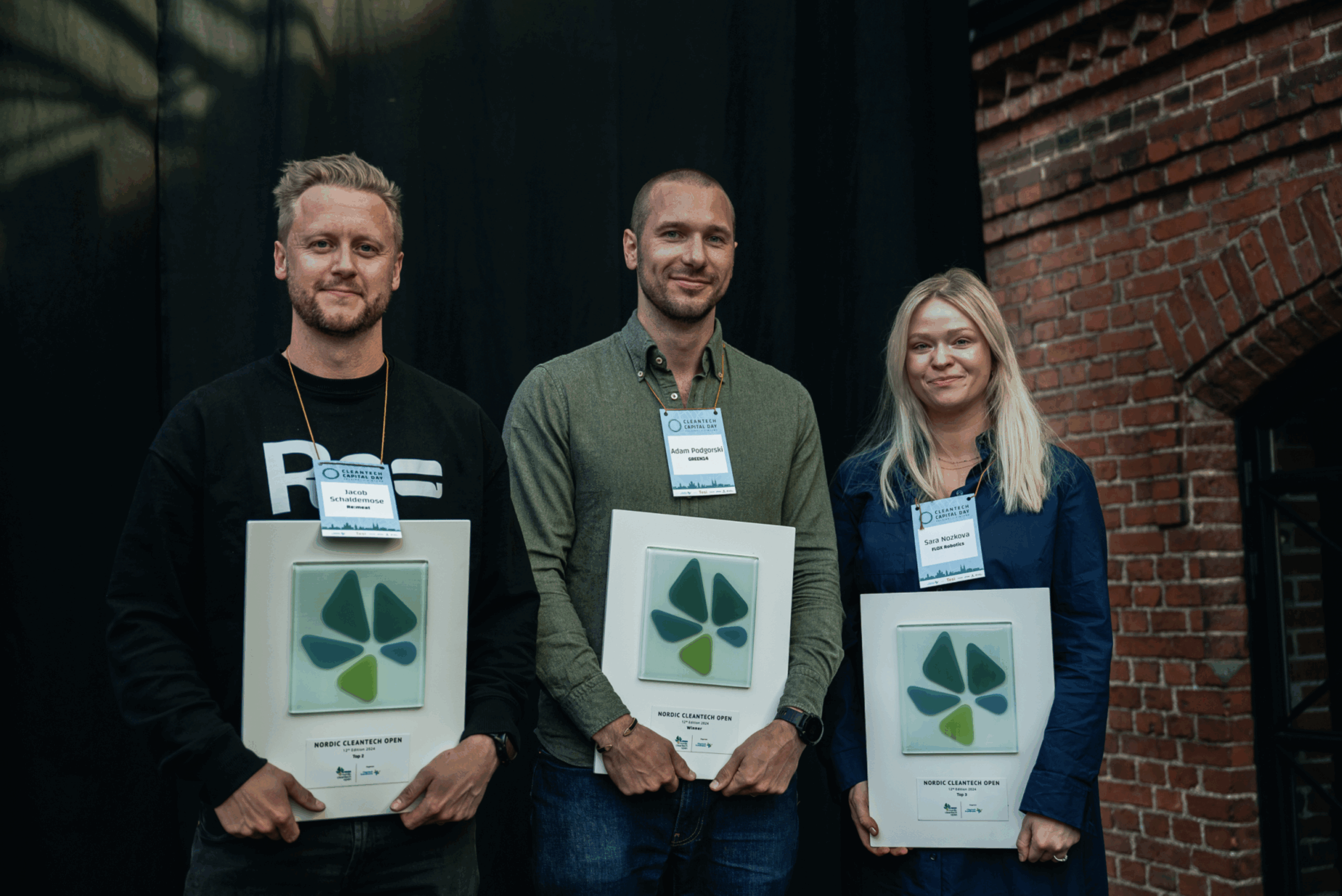
Photos: Left: The prize ceremony where Adam Podgórski, CEO of Green14, is captured moments after learning he had won the Nordic Cleantech Open 2024 in Helsinki, Finland. Right: Adam joined by the incredible runners-up — Jacob Schaldemose Peterson, CEO of Re:meat and Sára Nožková, CEO of Flox Robotics — two other Swedish companies making waves in the climate tech space. 

Their journey didn't stop in Helsinki. Not long after their NCO win, Green14 secured a major investment: €2 million from Ingka Investments, the investment arm of IKEA, in early 2025.  

Thanks to this, as well as substantial funding from the Swedish Energy Agency, Green14 has grown from 4 to 16 employees in just over a year. The focus has been on building the team and scaling their technology, and the team plans to hire another 10 people in the near future, covering engineering, IP, and corporate sales. They have established key partner relationships during 2025, allowing them to test producing even more materials in their reactor to extend their customer base. Another exciting development is that Green14 is currently building a full-scale demo facility set to become commercial in 2028. 

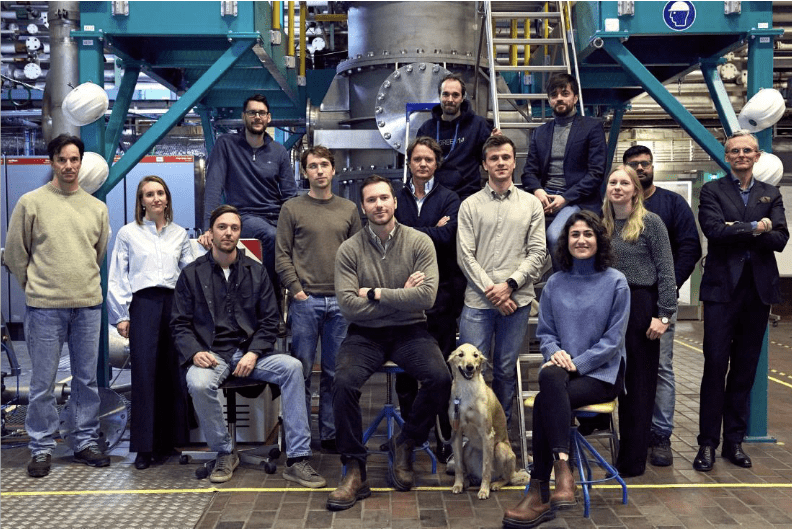
Photo: A big part of the growing Green14 team in front of their reactor at their headquarters at the Royal Institute of Technology (KTH) in Stockholm, Sweden. Joined by one of Adam’s best friends and valuable teammates, Freya the dog.  

Since Green14’s time in NCO, the market winds have shifted. Investors have turned their gaze toward resilience and defense, and Green14 has evolved with the times — moving from silicon to the exciting world of aerospace metals like titanium alloy and tungsten.

Their vision? To one day license out their tech to major industry players to have 100+ reactors running. To get there, they’ve brought in three mathematicians/AI engineers — including one former NASA researcher — who are building a digital twin of the reactor: a virtual copy of a machine so hot that no sensor on Earth survives inside it. This digital twin is a potential game-changer: instead of spending weeks (and money) testing different reactor settings to find the right “recipe” for turning material waste into high-value metal powder, companies can simulate everything up front. Faster, cheaper, smarter production from day one. 

Green14 is currently raising around €6 million — about half already secured through an external VC fund and existing owners — to scale production and deliver their first commercial batches of metal powder. Their valuation sits comfortably within the European deeptech scale-up range, with more investor discussions already underway ahead of a larger round planned for late 2026. 

And they now have several patents to process >15 materials contributing to greater circular production of raw materials. With visits from Prince Daniel of Sweden, Sweden’s Minister for the Environment Romina Pourmokhtari, and EU Minister Jessica Roswall, who joined Green14 to discuss circularity and resilience in the EU – it’s clear that they’re playing a big part in shaping Europe’s industrial future.

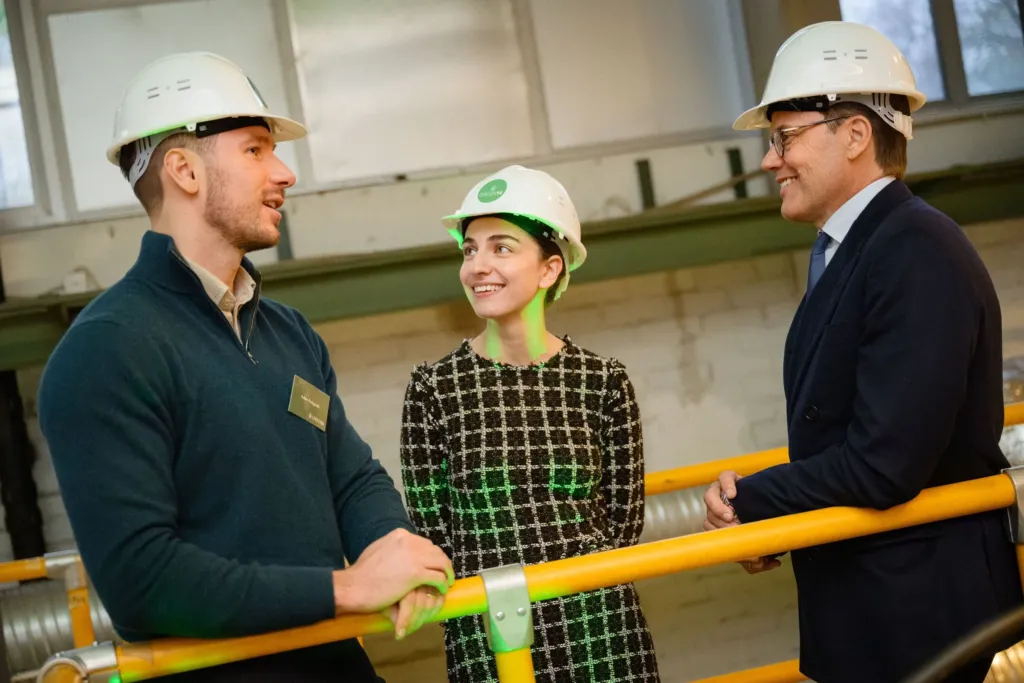
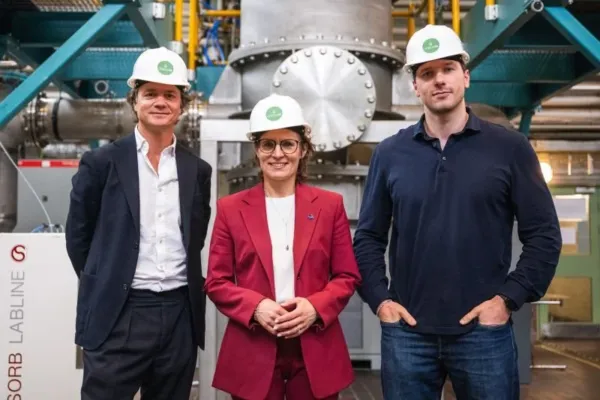
Photos: Left: Adam from Green14 hosts a visit from Sweden's Minister for the Environment Romina Pourmokhtari and Prince Daniel at their Stockholm facility. Right: Adam and Jan Dinkelspiel from Green14 welcome EU Minister Jessica Roswall for discussions on innovation and circularity. 

Reflecting on NCO, the founder emphasizes that while events provide excellent visibility and networking, deep tech companies need strong technology validation and customer traction to attract investors. One-on-one conversations are more productive than mass pitches, and timing and market focus are critical for investment success. 

For Adam and the rest of the Green14 team, this is just the beginning. With new plans on the horizon and fresh faces soon joining the journey, their story is far from over. Nordic Cleantech Open was a key stepping stone on their cleantech adventure — and with the 13th edition coming up in 2026, it could be your turn next! 

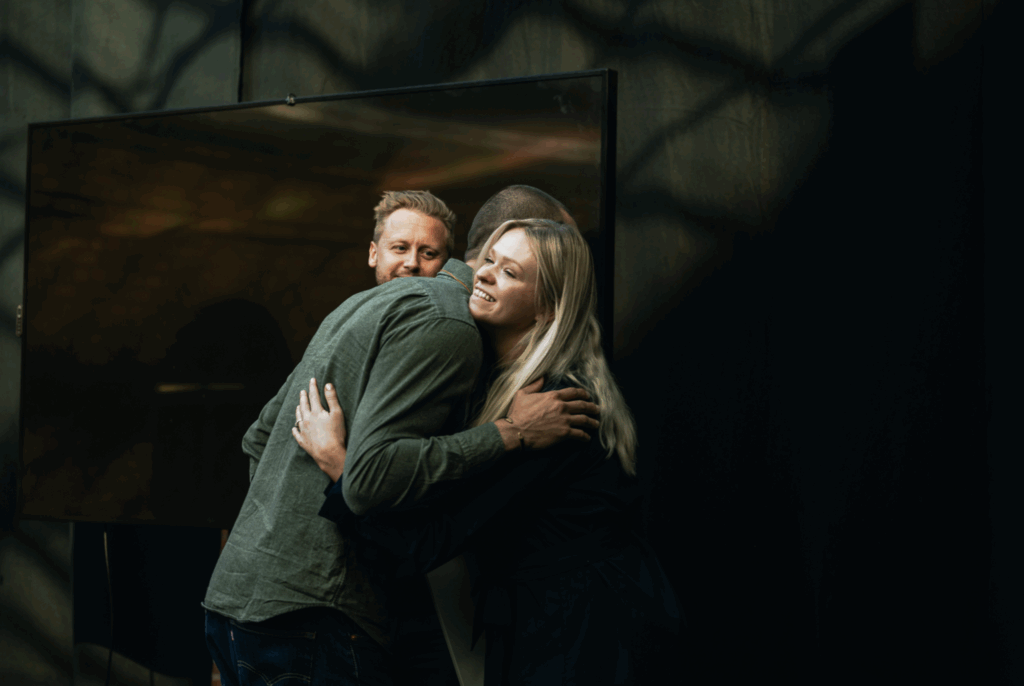
Photo: An embrace by the top 3 from NCO's 12th edition: Adam from Green14, Jacob Petersson from Re:meat (now Curve) and Sara Nozkova from Flox.

Only one company takes the top prize, but Nordic Cleantech Open is built on collaboration and camaraderie — a space where climate tech founders lift each other up and makes sure every participant feels celebrated. After all, founding a company is one of the biggest achievements in itself and us at Cleantech Scandinavia feel so proud and inspired by all companies that took part. 

Green14: From winning Nordic Cleantech Open to Industry Impact2026-02-24T13:30:12+01:00
Go to Top