
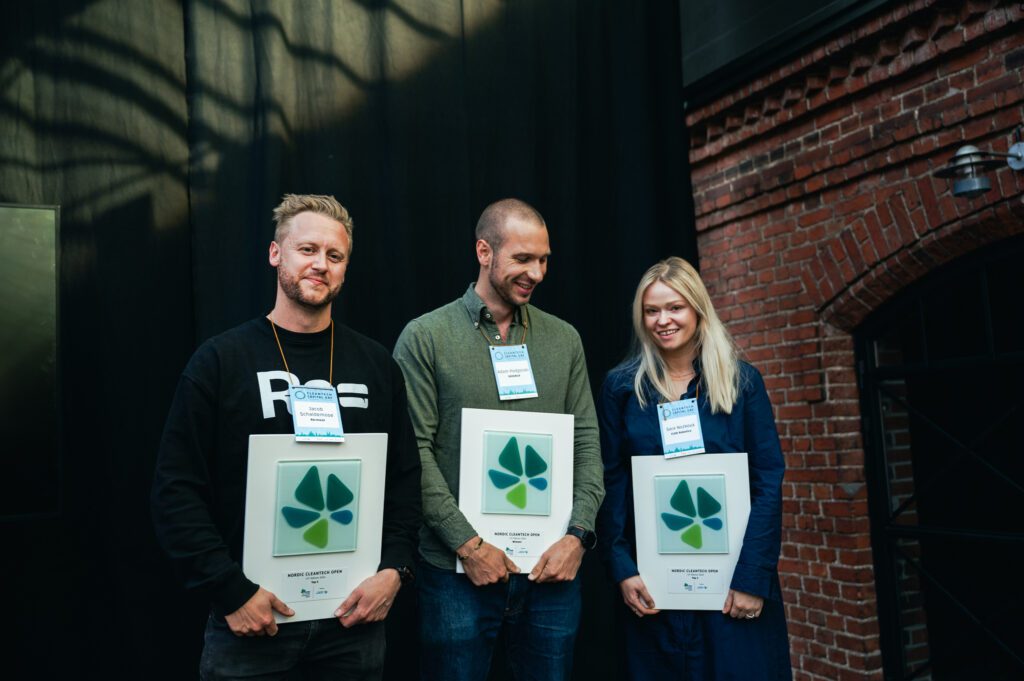
When we first met the startup Re:Meat in 2024, it was clear that something big was brewing. Since then, they’ve rebranded to Curve, and their vision has grown as fast as their bioreactors. Cleantech Scandinavia sat down with CEO and co-founder Jacob Schaldemose Peterson to discuss Curve’s experience in the 12th edition of Nordic Cleantech Open, where they placed in the top three, and to hear what has happened since.
Curve is on a mission to make protein production more sustainable, not just meat, but also milk proteins, collagen for cosmetics, and even other valuable molecules. Through precision fermentation, they can program microorganisms to produce exactly the protein you want. Think of it as sending tiny DNA instructions to yeast and bacteria, enabling Curve to produce milk, collagen, or other valuable compounds.
One of the most exciting updates is that Curve has two new 300-liter food-grade bioreactors, which arrived in Lund in January 2026. This means they can now test their technology at an industrially representable scale, a big step toward making proteins more accessible and environmentally friendly.
Building a cleantech company involves far more than science; it’s a balancing act of wearing many hats. Securing the right investors, finding the right partnerships, and building strong relationships with customers are just as important, and Curve is tackling all these aspects at once.
After raising €1M in March 2025 from family offices and angel investors, Curve is now gearing up for a €2M round in spring 2026 with Swedish food tech investors ready to help scale their precision fermentation technology and bring sustainable proteins to multiple industries.
The team behind Curve is as diverse as their technology: two co-founders handling commercial agreements and financials, a CTO leading hardware development, an R&D scientist with a background in microbiology, an experienced business development professional handling the customer pipeline, and a relatively new addition; a biotech engineer supporting the development of the intersection of hardware and software. Together, they aim to enable today’s meat, dairy, and cosmetics producers to become bio-producers, without consumers even noticing.
Reflecting on their NCO experience, Jacob highlights the strong format and the opportunity to connect with a wide range of investors. While food tech remains a niche within cleantech, Curve sees growing momentum and would welcome even more food-focused investors in cleantech circles. Overall, the event offered valuable exposure and meaningful conversations, underscoring the potential of food tech in a highly specialized field.
Curve isn’t just a name change, it’s a step toward making sustainable protein production commercially viable, while showing that science can be exciting and accessible along the way. The company is now moving forward with technology that has the potential to transform not only the food industry but also make waves in cosmetics and chemical production.
Visit Curve’s website to learn more: https://www.curvebio.tech/
Curve’s Linkedin: https://www.linkedin.com/company/curvebiotech/